Leak detection company · Greensboro, NC

Leak Detection in Greensboro, NC:
Hidden Leaks Pinpointed, Not Guessed At

A water bill that doubled, a meter that never stops, a damp patch with no source. We trace hidden leaks in walls, under slabs and across yards, mark the exact spot, and put the findings in writing.

  • Walls, ceilings, slabs, yard lines and irrigation
  • Emergency leak detection at any hour, at the same rate
  • Findings in writing, ready for a repair quote or an insurer
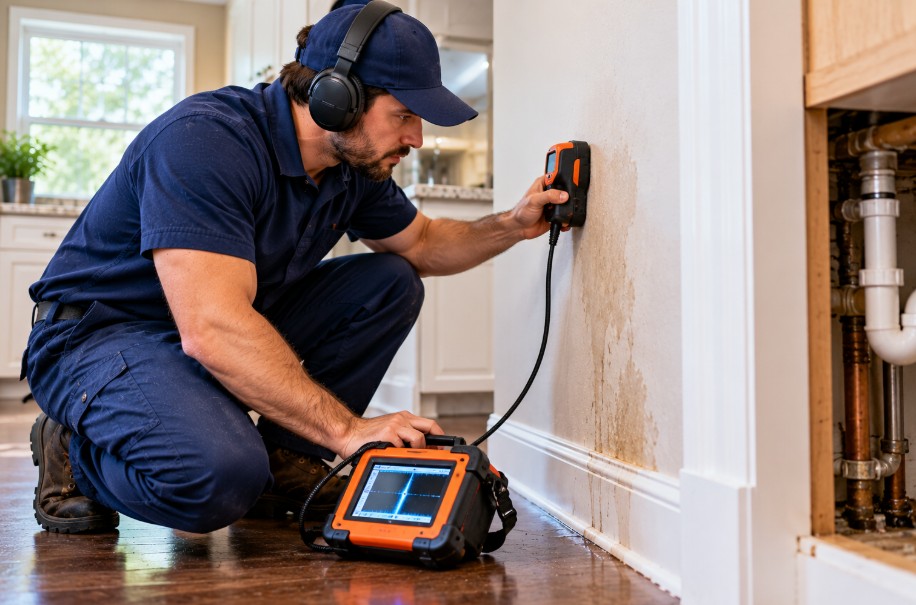
Plumber using a leak detection device to locate a hidden water leak inside a Greensboro
Acoustic & Electronic Pinpointing
Method Acoustic Sonar
Slab Leaks Non-Destructive
Reports Written for Insurer
Dispatch 24/7 Any Hour
Zero Guesswork: We locate the exact fitting under concrete or drywall before any floor or wall is opened.
60-Minute Response Inside Greensboro city limits
Licensed & Insured North Carolina plumbing contractor
First Visit Resolution Most repairs finished on arrival
Upfront Written Quote No after-hours surcharge

Most leaks we are called to find have already been looked for. The owner has checked under the sinks, sniffed the closets and lifted the toilet lid. A hidden leak is hidden because it is inside something: a wall, a slab, or three feet of red clay.

Finding it is its own job, and it comes before any repair.
Triage & Assessment

Leak detection or leak repair: which do you need?

What you have What you need
Water dripping from a pipe, valve or fixture you can see Repair
See our water leak repair page.
A pipe that has split and is spraying Emergency
Emergency burst pipe repair
A stain, damp patch or musty smell with no visible source Locate First
Leak detection first
A high bill, or a meter that moves with everything off Locate First
Leak detection first
A warm spot on the floor, or the sound of water running Locate First
Leak detection first. It is likely under the slab.
A soggy strip of yard Locate First
Leak detection, to establish whether the line is yours or the city's
leak in greensboro home
Non-Destructive Pinpointing: Acoustic listening devices and thermal scanning map subterranean lines before concrete or drywall is ever disturbed.
Detection and repair can happen on the same visit. Once the leak is found, the repair is priced separately and in writing.
Priority Situations

Emergency leak detection

A hidden leak becomes an emergency when it is doing damage you can see but cannot stop.

When To Call Immediately

  • Water is coming through a ceiling or a light fitting, and nothing above it looks wet.
  • A wall or floor is getting wetter by the hour.
  • The meter is turning fast with every tap closed.
  • A floor is warm and you can hear water under it.
  • Water is near the electrical panel or outlets.

While you wait

Close the main valve if the damage is spreading. This stops the leak. It also silences the sound we listen for, so we reopen it under control when we test.
Turn the water heater down if a floor is warm. A warm floor means a hot line, and the heater keeps refilling it.
Do not cut into walls to look. Blind openings add damage and repair cost without finding the leak.
Note when it started and read the meter. Both help narrow it down.
If water is coming up in the street or at the curb: Call city Water Resources dispatch at 336-373-2033. That leak is the city's.
Systematic Process

What a leak detection visit includes

Each step rules out part of the plumbing until one spot is left.

History

When it started, what the bills show, how old the house and its pipes are, whether it sits on a slab or a crawl space, and what work was done recently.

Confirmation

With every fixture closed, the meter shows whether water is leaving the system and roughly how fast.

Isolation

The house valve separates the yard line from the house. The water heater inlet separates hot from cold. Fixture valves rule out each fixture.

Pressure test

A gauge on the suspect section shows whether it holds or drops.

Scan and listen

The wet area is mapped, and the pipe route is checked with the methods below.

Pinpoint and mark

The spot is marked on the floor, wall or ground, with the depth for a buried line.

Written findings

You get the location, the methods used, photos and images, the likely cause, and the repair options.

Diagnostic Technology

Leak detection methods

Custom Tool Selection for Every Plumbing Build

No single tool finds every leak. The method is chosen by where the leak could be and what the pipe is made of.
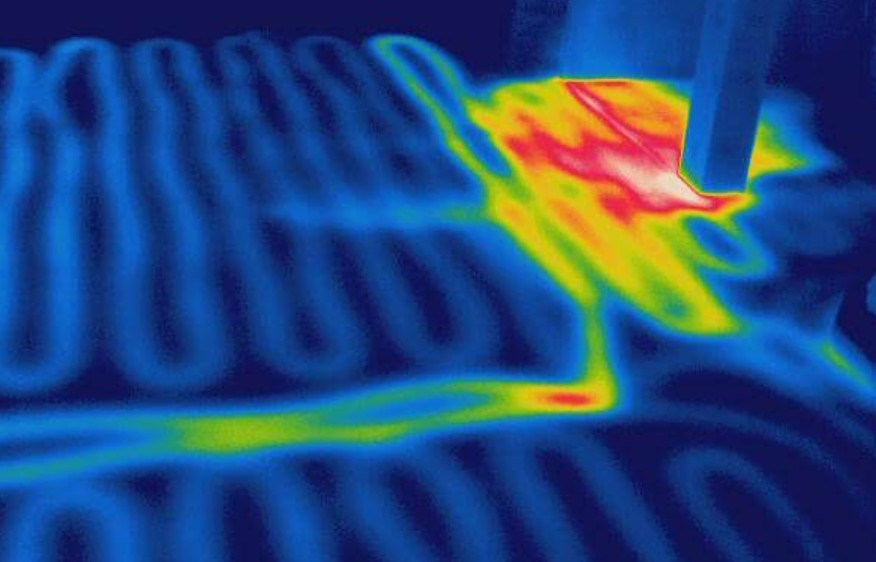
thermal leak detection image
Method How it works Best at Its limits
Meter and usage data Reads flow with every fixture closed, or shows daily use over time Confirming a leak and judging its size Says nothing about where
Valve isolation and pressure test Sections are closed off one at a time while a gauge is watched Narrowing the leak to one branch Needs valves that still close fully
Moisture mapping Meters read how wet drywall, framing and subfloor are Finding the wettest point in a wall, ceiling or floor Water runs along framing, so the wettest point is not always the leak
Thermal imaging A camera shows temperature differences on surfaces Hot lines in slabs and walls, and damp areas cooled by evaporation Sees surfaces only. Cold lines under thick concrete show little.
Acoustic listening A ground microphone picks up the sound of water escaping under pressure Slab leaks and buried lines Traffic, HVAC and some plastic pipe make it harder
Tracer gas The line is drained and filled at low pressure with 95% nitrogen and 5% hydrogen. The hydrogen works up through the ground to a detector. Quiet leaks and long yard lines Slower, and the line must be drained first
Line tracing A transmitter shows the route and depth of a buried pipe Yard lines, and pipe routes under slabs Plastic pipe needs a transmitter fed into it
Inspection camera A small scope through a small hole Confirming a leak inside a wall cavity Needs an opening, made only with your approval
Dye and flood tests Colored water in a toilet tank, shower pan or drain Leaks on the drain side Not for pressurized supply lines

Greensboro City Main Infrastructure Correlation

The city works the same way on its own mains. Greensboro Water Resources uses an acoustic correlation system that times leak noise between sensors on hydrants and valves. The maker reports the city has found more than 50 main leaks with it.

Local Architecture Knowledge

Where hidden leaks hide in Greensboro homes

The age and build of a house decide where a leak can hide and how long it stays hidden.

House Where the leak usually is Why it stays hidden
Older homes on crawl spaces Galvanized joints and aging copper under the floor Water drips onto the ground cover and soaks away. Nothing shows upstairs until the framing is wet.
Ranches and townhomes on slabs Copper lines in or under the concrete The slab hides it. Only a hot-side leak warms the floor.
Homes from about 1978 to 1995 Gray polybutylene fittings inside walls and ceilings, and blue polybutylene yard lines The fittings fail inside finished walls. In townhomes, water can travel to the unit next door.
Two-story homes from the 1990s on Upstairs bath supplies, shower valves, second-floor laundry, attic water heaters The stain shows on a ceiling well away from the source.
Any home with a sprinkler system Buried irrigation lines, zone valves, the backflow assembly The system only runs on its schedule, so the meter only moves then.
Greensboro Census Context: Census figures put more than 37,000 Greensboro housing units in the 1980s and 1990s, the polybutylene years.
Customer Portal Intelligence

Read your own water data first

Greensboro's customer portal, GSO WaterWise, shows your daily water use and sends real-time leak notifications. The shape of the numbers says a lot about the leak.

What the daily use shows What it usually means
The same steady use every day, including days nobody was home A constant leak on a pressurized line
Spikes on the same days each week The sprinkler system, on its schedule
A slow climb over several weeks A small leak getting bigger, often a toilet or a pinhole
One sudden jump that stays high A fitting or line that has let go
GSO WaterWise Diagnostic

How To Speed Up Your Service

Logging into your Greensboro municipal water utility account before calling gives our dispatchers and testing plumbers invaluable historical data.

Tell us what the portal shows when you call. It can shorten the testing.
Municipal Boundaries & Water Resources

Your side or the city's: what detection settles

The City of Greensboro is responsible for leaks up to your property boundary. Its rules also keep the meter, the meter box and the pipe the city installed as city property. A leak past that is the owner's.

The city looks for its own leaks. Water Resources runs annual water audits, and in October 2023 it sought consultants to build a 10-year plan to reduce water loss.

When the wet spot is near the street, detection answers the question that matters most: whose pipe is it?

City Responsibility
At the meter or in the street

Report it directly to Greensboro Water Resources dispatch.

Owner Service Line
Between the meter and the house

It is your service line. The pinpointed spot and its depth go into the report, ready for the repair.

Traced & Verified
Not sure

The line is traced and the leak marked, and you can show the city the findings.

Real Estate & Legal Protection

Leak detection for insurance claims, home buyers and landlords

Insurance claims

The North Carolina Department of Insurance tells homeowners to photograph the damage, make temporary repairs to prevent more of it, and keep every receipt. Insurers generally treat sudden damage differently from damage caused by neglect.

A dated report showing where the leak was, what failed and when it was found gives your adjuster facts instead of guesses. Your insurer decides coverage, not us.

Buying a house

Run the meter test during your due diligence period, with every fixture closed. If the meter moves, or the house has a slab, polybutylene or a history of stains, have it checked before you close.

A sewer camera inspection is a separate test; see our sewer line repair page.

Landlords, HOAs and property managers

  • Empty units: a leak in a vacant rental can run for weeks. Leak notifications in GSO WaterWise catch it early.
  • Shared walls: in townhomes and condos, water often shows up in the unit next to the one that is leaking. Detection finds which unit's pipe failed.
  • Who pays: the HOA documents usually decide that, and the report gives everyone the same facts.
Diagnostic Boundaries

What leak detection can and cannot find

Supply leaks

Pressurized Piping

Any pipe that holds pressure can be tested and traced: hot and cold lines, the yard service line, irrigation lines and fixture connections.

These are what most of the methods above are built for.

Drain leaks

Gravity Drainage

A drain only leaks while it is being used, so a pressure test will not find it. Shower pans, tub drains, toilet seals and drain lines are checked with dye, a controlled flood test or a camera.

Tested through flow simulation and specialized visual scopes.

Water that is not a plumbing leak

Some damp patches have nothing to do with the plumbing. We tell you when that is the case.

A roof or flashing leak, which shows up after rain.
An air conditioner's condensate line or drain pan.
Groundwater seeping into a crawl space.
Cold pipes sweating in humid summer air, dripping as if they leaked.

How exact it is

Most leaks are pinpointed to a small area on the first visit. Some need a second method, or a small inspection opening made with your approval. The report says how sure the finding is.

Upfront Written Pricing

What affects the cost of leak detection

Leak detection is priced on its own, in writing, before testing starts. Five things set it.

01

Where the leak could be

One wall is a smaller search than a slab or a 100-foot yard line.

02

How many methods it takes

A pressure test and moisture map may settle it. A quiet slab leak may also need acoustic listening or tracer gas.

03

Whether the leak is steady

A leak that comes and goes may need a longer test.

04

Access

Furniture over a slab, a finished basement or a sealed crawl space all slow the work.

05

Drain-side testing

Dye and flood tests are added when the supply lines test tight.

No After-Hours Premium

Our rate is the same at night, on weekends and on holidays.

You receive a written diagnostic price before testing starts, whether you call at noon or 3 AM.

The repair, once the leak is found, is quoted separately and in writing before any pipe is cut or opened.
Clear Answers & Diagnostic Protocol

common questions

Honest answers about residential leak detection, diagnostic equipment, property boundaries, and insurance documentation in Greensboro, NC.

Q1

How long does leak detection take?

A single leak inside a house is usually found in one visit. A slab leak or a long yard line can take longer, because each test narrows the search before the next one starts. Tell us what you are seeing when you call and we will give you a realistic estimate.

Q2

Will you damage my walls or floors?

No. We do not cut into walls or floors to search. If a small inspection opening is needed to confirm a spot, we show you the readings and ask first.

Q3

Can you find a leak under a concrete slab?

Yes. We pressure-test to confirm which line is losing water, then use acoustic listening and thermal imaging to narrow it down and mark the spot on the floor. Repair options are on our water leak repair page.

Q4

Can you find a leak in my yard line?

Yes. The line from the meter to your house is yours. We trace its path, then listen along it or use tracer gas to find where water is escaping, and mark the spot on the ground.

Q5

Can you tell if the leak is the city's?

Often, yes. If the leak is on the street side of the meter, it is the city's to fix. Call Greensboro Water Resources at 336-373-2033, day or night.

Q6

Does the water need to be on?

Most methods need the line under pressure. Tracer gas is the exception: it can be pushed through a drained line.

Q7

Do you provide a report for insurance?

Yes. You get written findings: where the leak is, how it was found, and photos or readings. Your insurer decides coverage; the report gives them the facts.

Q8

What if you cannot find the leak?

We tell you what we tested, what we ruled out and what the next step should be. We do not guess at a spot to have something to show.

Q9

Do I need a leak detection company or a plumber?

We are both. We find the leak, then quote the repair. You decide whether we fix it on the same visit.

Q10

Do you offer emergency leak detection at night?

Yes. We answer 24 hours a day, and night calls cost the same as daytime calls.

Guaranteed Upfront Facts: Every leak detection diagnostic is performed non-invasively by licensed North Carolina plumbers. Written pricing is provided before testing starts.
Scroll to Top